The Sword in European History
The sword occupies a unique and symbolic place in European history. More than just a weapon, it was a masterpiece of metallurgy, a badge of status, a symbol of justice and power, and a central figure in mythology and art across millennia. Its evolution mirrors the technological, social, and martial journey of the continent itself.
Early Origins: Antiquity to the Migration Period
The story begins with the short, thrust-centric blades of the Bronze Age. The Iron Age brought longer weapons, but the iconic figure is the Gladius, the short, double-edged stabbing sword of the Roman legionary, designed for disciplined, close-order combat. As the Empire faced nomadic cavalry, the longer, slashing Spatha – likely of Celtic origin – gained prominence. This design would form the basis for the early medieval sword.
The Age of the Knight: The Medieval Sword (c. 5th - 15th Centuries)
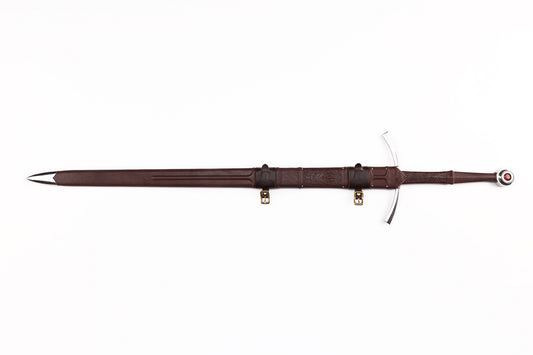
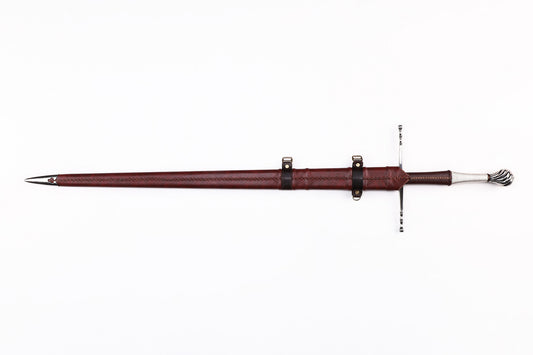
This is the classic "knightly" sword. Early medieval types like the Viking Age sword were often pattern-welded, versatile cutting and thrusting weapons. The High Middle Ages saw the development of the iconic arming sword (or knightly sword): a double-edged, straight weapon with a cruciform hilt, optimized for one-handed use alongside a shield. It was a symbol of chivalry and nobility.
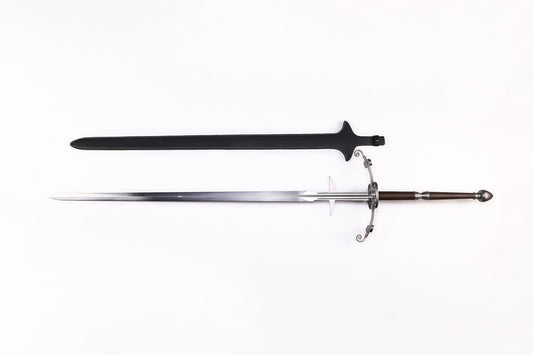
By the late medieval period, advances in plate armour necessitated more specialized designs. The longsword (or hand-and-a-half sword) emerged—a longer, tapered blade that could be wielded with one or two hands. It was used for powerful blows, precise thrusts into armour gaps (half-swording), and even gripping the blade to use the hilt as a hammer (murder strokes).
The Renaissance and Beyond: Refinement and Specialization
With the full development of plate armour, the thrust became paramount. The estoc was a rigid, edgeless, acutely pointed sword designed purely for piercing armour. As full plate declined, civilian dueling and military sidearms drove new forms.
The rapier, a long, slender, complex-hilted weapon of 16th-17th century Spain and Italy, epitomized the Renaissance focus on personal dueling, finesse, and deadly thrusting technique. It was a fashion statement and a dueling tool. For the battlefield, the sidesword (a cut-and-thrust weapon) and later the military backsword or smallsword (an even lighter, faster thrusting sword) became standard officer's wear into the 18th century.
The Final Forms: Sabers and the End of an Era
Cavalry required a heavy, curved cutting blade: the sabre. Adopted from Eastern European and Near Eastern influences, it became the dominant cavalry sword of the 19th century. Infantry officers might carry the spadroon or the British 1796 Pattern Light Cavalry Sabre. The 19th century saw the last widespread use of the sword in European warfare, culminating in the elegant but increasingly anachronistic dueling sabre and épée.
More Than Steel: Symbolism and Legacy
The sword's meaning always transcended combat. It was central to coronation ceremonies (Curtana, the Sword of Mercy, is part of the British Crown Jewels). It represented royal authority (The Sword of State), judicial power, and the knightly virtues of courage and justice. In myth, from King Arthur's Excalibur to Sigurd's Gram, it was a magical, destiny-shaping object.
Conclusion
The European sword evolved from a bronze sidearm to a finely balanced instrument of personal defense, reflecting changes in warfare, technology, and society. While obsolete on the modern battlefield, it remains a potent icon of a bygone era—a testament to the artisan's skill, the warrior's code, and the enduring power of a symbol forged in steel